Updated: November 2026 · The AffittaSardegna team, Porto Torres
In Barbagia the sweets to look for are seadas with honey, papassinos, Nuoro's aranzada, Tonara nougat and Fonni biscuits; among the cheeses, raw-milk Fiore Sardo PDO — made above all in the Barbagia di Ollolai, with Gavoi in the lead — Pecorino Sardo PDO and casu axedu. The best time to taste them on the spot is now: until 13 December 2026 the last stages of Autunno in Barbagia (Cortes Apertas) remain open, and from there it's straight on to Christmas, when these sweets return to every family's table.
Holiday homes in Cala Gonone, the base for Barbagia
We have been managing holiday homes in Sardinia since 2011. Save up to 15% by booking direct, with real local support and zero commission.
We know these flavours up close: we have managed holiday homes directly since 2011 and, when summer ends, the people still staying in Cala Gonone and Siniscola almost always ask us the same thing: “Where do you really eat well, up in the mountains?”. Here is the most honest answer we can give.
Every village has its own sweet, its own name for it, its own amount of honey. The same raisin biscuit is called sos pabassinos in the centre-north and is papassinus in the south of the island; and while in the Campidano it's flavoured with cinnamon or sapa, in Barbagia and Logudoro they use citrus peel, wild fennel seeds or aniseed. Anyone who tastes with this curiosity — asking for the local name, the family version — takes home much more than a flavour.
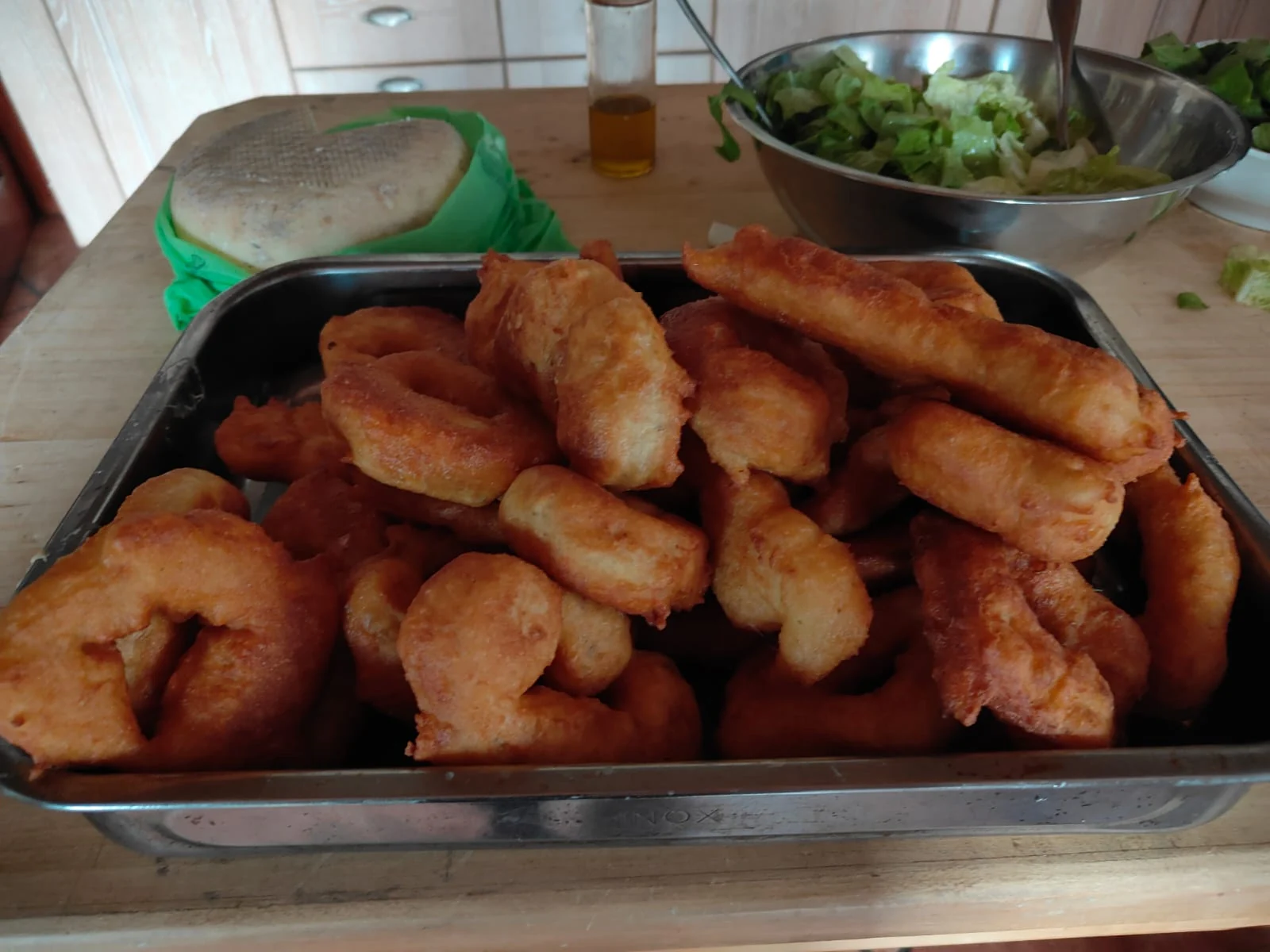
Two discs of pastry enclosing fresh, slightly sour cheese, fried and topped with honey, ideally strawberry-tree honey, whose bitter note balances everything. Sardegnaturismo places its roots in the agro-pastoral culture of Barbagia, linked to the shepherds' return from transhumance. Today you'll find them all over the island, but this is where they make most sense: the right cheese is made a few kilometres away.
Our tip: a seada should be eaten freshly fried. If it arrives lukewarm and soft, it was made too long beforehand.
Raisins, almonds, walnuts, flour, eggs and lard, with white icing or silver sprinkles. In Barbagia the scent is of citrus and aniseed. They are the biscuit of special occasions: in autumn they start appearing in homes and accompany the winter up to Christmas.
Very thinly sliced orange peel, candied in honey and combined with almonds. The regional list of traditional products associates it particularly with the province of Nuoro; Sardegnaturismo links it to baptisms and weddings in Barbagia and mentions it among the festive sweets of Mamoiada. It's a gift sweet, small and precious: ask whether it's made with local honey, it makes all the difference.
Tonara calls itself “the village of nougat makers”. Its nougat is soft, made with honey (wildflower, strawberry-tree or eucalyptus), almonds, hazelnuts or walnuts, without sugar: the honey is melted over a low heat and stirred for hours. The first records date back to the late nineteenth century. It is the Sardinian Christmas nougat par excellence, even though its festival is held on Easter Monday.
In Fonni — the highest village in Sardinia, at around a thousand metres — sweet-making revolves around its sponge fingers: long, soft, scented with lemon or vanilla. In the regional list they appear as “Biscotti di Fonni”, with the synonym pistoccu. Be careful not to confuse them with the pistoccu of Ogliastra, which is a bread: same word, different worlds.
Two names to note down. The bucconettes are recognised as a traditional product of the Barbagia di Belvì; the caschettas are thin pastries filled with honey, saffron and almonds, linked above all to Barbagia and Belvì. You're more likely to find them at village festivals than in shop windows.
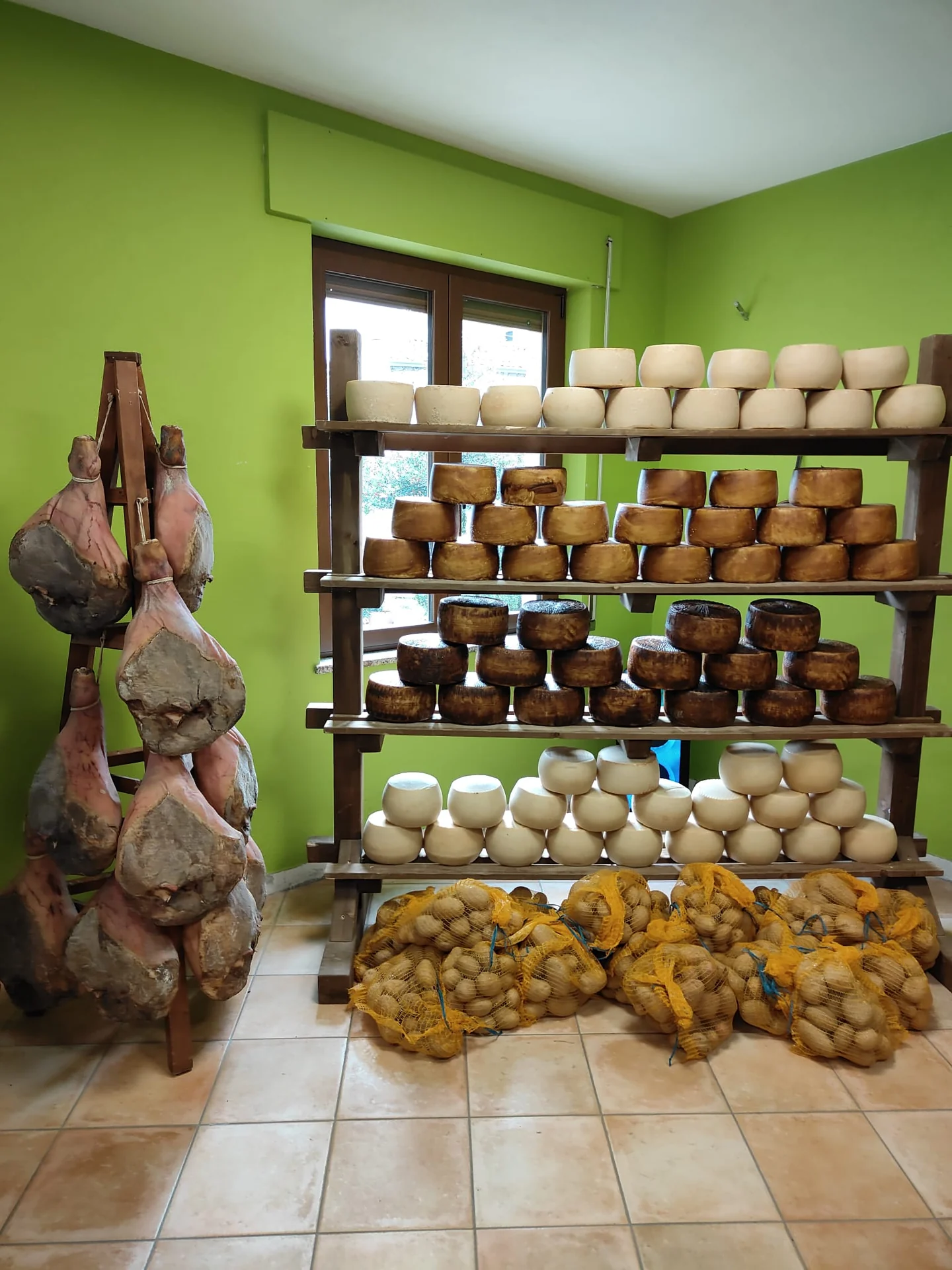
It's the most Barbagia-style pecorino there is. It's made with whole raw milk from Sarda-breed sheep, lamb or kid rennet, in copper vats; this is followed by light smoking with Mediterranean scrub woods, which gives the rind its golden-yellow colour. The shape of two joined truncated cones is called the “mule's back”. It may be produced throughout Sardinia, but production is concentrated in the Barbagia di Ollolai, especially in Gavoi, where the protection consortium is based. PDO since 1996, it already had a designation of origin from 1955.
Young and for the table after a few months; aged more than six, it becomes a grating cheese: savoury, slightly spicy, long.
Sardinian sheep's milk, produced throughout the island, in two versions: mild (around 20–60 days of ageing, delicate flavour) and mature (over 60 days, stronger, sometimes smoked). If you want a cheese to take home that everyone will like, the mild one is the safest choice.
A traditional Sardinian product, fresh and slightly sour, made with sheep's or goat's milk. It has dozens of names: frue, fruhe, merca, and in Ogliastra, when kept in brine, fiscidu. Fresh, it's eaten as it is, with bread; aged, it flavours soups and, in Ogliastra, the filling of culurgiones. It's the cheese that best tells the story of life in the sheepfold, and the one visitors know least.
In Seulo, which gives its name to the Barbagia di Seulo, July sees the celebration of su casu in filixi, a cheese unique to the village.
Official Autunno in Barbagia calendar (cuoredellasardegna.it):
| Dates | Villages |
|---|---|
| 21–22 November | Atzara |
| 28–29 November | Gadoni, Oniferi |
| 6–8 December | Fonni |
| 12–13 December | Ortueri, Orune, Seulo |
A few tasty ideas: in Atzara, in the Mandrolisai, the sweet-making tradition speaks of bucconettes and gattou with almonds, and this is Mandrolisai wine country; in Gadoni, in the Barbagia di Belvì, decorated breads such as pistoccu and cocoi, cheeses and honey; in Fonni, over the Immaculate Conception long weekend, the village biscuits in full Christmas season; in Ortueri the typical sweet is s'angule, linked to the patron saint's festival in early December. Detailed programmes come out close to the dates: always check them on the official website.
The December stages are the perfect bridge to the holidays: it's the time when nougat, aranzada and papassinos are also bought as gifts. And if you're staying near Siniscola, there's a detail few people know: this is exactly where the pompia, a rare citrus fruit and Slow Food Presidium, hand-picked from mid-November to January. Its peel is used to make sa pompia intrea, cooked for hours in honey, and a version of aranzata. A sweet you won't find in any guide to Barbagia, but one that tells the other side of this land beautifully.
To enjoy Cortes Apertas you don't need to sleep in the village: a comfortable base and a car are enough. Our homes in Cala Gonone and Siniscola / Santa Lucia stay open in autumn too, have air conditioning and let you head up to Barbagia in the morning and return near the sea in the evening. Before you set off, write to us: we'll tell you which stage is easiest to reach from your home.
you save up to 15% by booking direct on affittasardegna.it: you speak with the people who have managed the home since 2011, with no intermediaries.
What is the most typical dessert of Barbagia?
The seada (or sebada): fresh, slightly sour cheese in fried pastry, topped with honey. Its roots lie in the pastoral culture of Barbagia.
What's the difference between Fiore Sardo and Pecorino Sardo?
Fiore Sardo PDO is made with raw Sardinian sheep's milk and is lightly smoked; Pecorino Sardo PDO uses thermised or pasteurised milk and comes in mild and mature versions.
Where is Fiore Sardo made?
The production rules allow the whole of Sardinia, but production is concentrated in the Barbagia di Ollolai, especially in Gavoi.
Does Tonara nougat contain sugar?
No: the traditional recipe uses honey, almonds, hazelnuts or walnuts, with no added sugar.
When does Cortes Apertas 2026 end?
The last weekend is 12–13 December 2026, with Ortueri, Orune and Seulo.
Can I take Sardinian cheeses on a plane?
Yes, preferably aged and vacuum-packed. Creamy products or honey above the liquids limits go in the hold; check your airline's rules.
you save up to 15% by booking direct
Same home, better price and direct contact with people who know the area. Write to us or choose your home online.