
One of the most spectacular sea caves in Italy, at Capo Caccia. You reach it by boat from Alghero or by walking down the Escala del Cabirol: 654 steps cut into the rock high above the sea. Inside you'll find stalactites, stalagmites and a saltwater lake, on a guided tour. Opening times and tickets vary with the season and the sea conditions: check them on the official website grottadinettuno.it.
A 38-metre calcite column, among the tallest in Europe, near Dorgali and a few km from Cala Gonone: you get there by walking down about 280 steps. Less famous than Neptune's Grotto but just as extraordinary — and less crowded. It's a long way from the north-west (about 2 hours from Sassari): worth it if you're staying in eastern Gallura or on the Gulf of Orosei.
Sardinia has more than 7,000 nuraghi. Many of them in the north are open to visitors: two in particular are well worth a stop.
One of the best-preserved Nuragic complexes in the north-west. Round huts, a central tower, a village around it: 3,500 years ago an organised community lived here. 15 minutes from Alghero, perfect for a morning.
In Gallura, near Arzachena, with an adjoining giants' tomb. Within a few km you'll also find the Coddu Vecchju giants' tomb and the Malchittu temple — a complete Nuragic circuit in half a day.
A medieval village on a crag overlooking the Gulf of Asinara. Doria Castle (Castello dei Doria), stone lanes, open basket-weaving workshops, a picture-postcard sunset. One of the most photographed villages in northern Sardinia.
Colourful houses on the river Temo, navigable in its final stretch, a cathedral and Malaspina Castle. It's in the province of Oristano, about an hour from Alghero along a spectacular coast road — a gem often left out of standard tours.
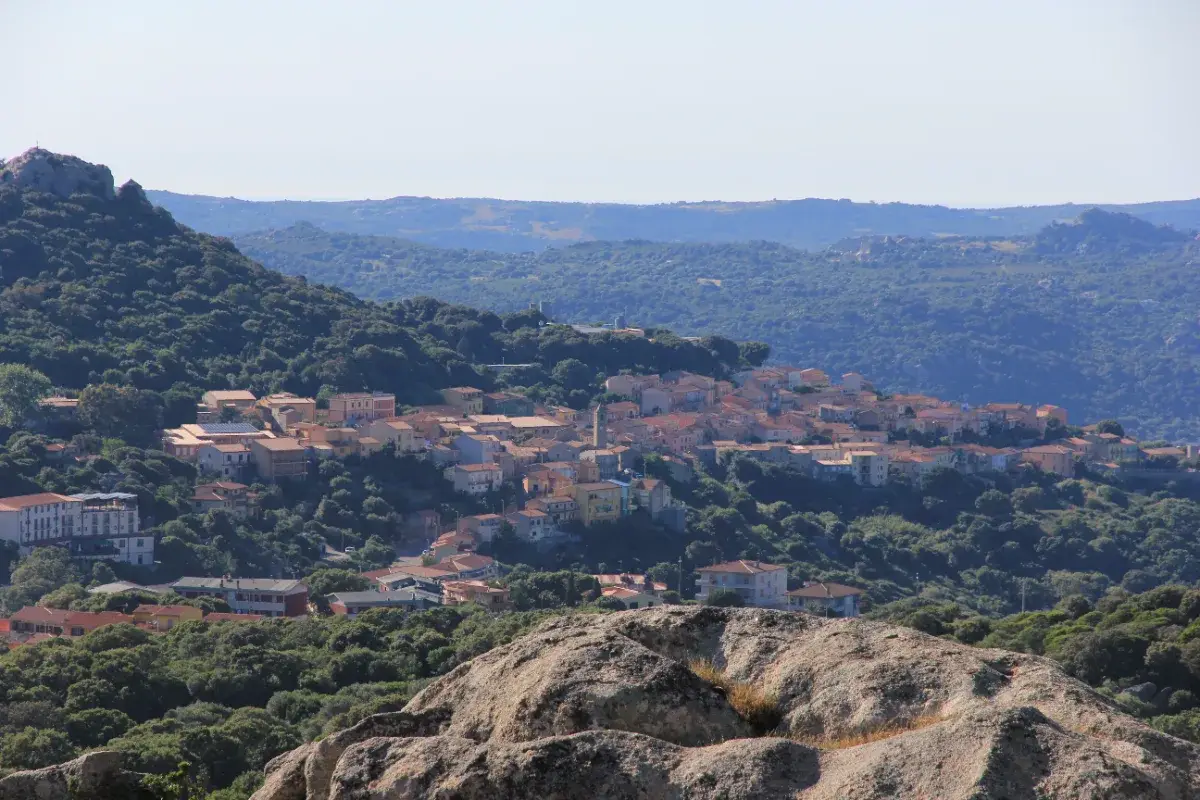
A granite village in Gallura with a museum of Sardinian banditry and a landscape of enormous boulders all around. Authentic, quiet, far from the tourist crowds.
Its Catalan old town is among the best preserved in Sardinia: ramparts overlooking the sea, a Gothic cathedral, paved lanes. Unlike anywhere else in Sardinia — the Spanish influence is visible everywhere.
One of the deepest canyons in Europe, with walls up to about 500 metres high. A full-day hike in the Supramonte, between Dorgali and Urzulei — moderate level, a guide is recommended. It's a long trip from northern Sardinia: it makes sense if you're staying on the Gulf of Orosei.
The roof of Gallura (1,359 m, Punta Balistreri), with views over north-eastern Sardinia and, on clear days, Corsica. A scenic road climbs from Tempio up to the heights; from there, easy trails set off through woods and granite.
The Gola di Gorropu is best walked from April to June and from September to November, in dry weather — in summer the heat in the canyon is intense. Wear hiking boots, not flip-flops.
The coves of the Gulf of Orosei — Cala Luna, Cala Mariolu, Cala Sisine, Cala Biriola — are reached mainly by sea (some also via long hiking trails). Landing at some coves in Baunei, such as Cala Mariolu, is regulated: ask your trip organiser for the current rules. A full-day boat trip from Cala Gonone or Santa Maria Navarrese is, for a great many visitors, the best moment of the whole holiday.
Book 1–2 days ahead in high season. Choose a small tour (max 10–12 people) rather than the big boats for a more authentic experience.
Sardinia produces wines found nowhere else in the world — Vermentino di Gallura DOCG, Cannonau di Sardegna DOC, Torbato di Alghero. Visiting a winery is an experience that changes the way you see the island.
A large historic estate north of Alghero: about 650 hectares, over 500 of them under vine, with a museum and guided tastings. Book your visit in advance.
This is the home of Vermentino di Gallura DOCG. The wineries between Tempio, Berchidda and Monti offer tastings amid granite landscapes. Recommended combination: a tour of the wineries and a stop in Aggius or Tempio.
Sardinian craftsmanship is a living heritage: woven baskets from Castelsardo, ceramics from Sassari, coral jewellery from Alghero, knives from Pattada, rugs from Aggius. Local markets are the right place to buy authentic pieces at honest prices — not mass-produced souvenirs.
| Event | Period | Where |
|---|---|---|
| Cavalcata Sarda | May | Sassari — a costume parade from many Sardinian villages |
| Faradda di li Candareri | August (14) | Sassari — the descent of the Candelieri, UNESCO heritage |
| Autunno in Barbagia circuit was born | September–December | Inland villages — open doors, crafts, food |
| Tempio Carnival | February | Tempio Pausania — among the most famous in Sardinia; in 2027 it peaks on Tuesday 9 February |
| Village food festivals (sagre) | All year | Every village has its own — ask locally |
A former penal colony, now one of the wildest national parks in Italy. White (albino) donkeys, mouflon, horses, wild boar, sea turtles and many bird species. You get there by ferry from Porto Torres (about 1 hr 15 min to Cala Reale) or by boat from Stintino; private cars aren't allowed on the island. On the island you get around on guided excursions, by bike or electric car (for hire) or on foot. An experience you won't find anywhere else in Sardinia.
7 main islands, a land and marine National Park, some of the clearest waters in Europe. Ferries leave Palau frequently (a 15–20-minute crossing). Caprera is linked to La Maddalena by a bridge and can also be reached by car; Spargi, Santa Maria and Budelli are reached by boat, RIB or on a tour (landing at Budelli's Spiaggia Rosa is forbidden). A day among the islands of La Maddalena is one of the most intense experiences Sardinia has to offer.
Want to experience northern Sardinia beyond the beach? With our partner Escursì you can book boat trips, winery visits and hikes online, chosen by people who live here.